NATIONAL INDUSTRIAL Plate Salinity Refractometer Aquarium 757901787485 Reef Natural
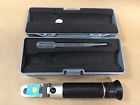
( Brand: National Industrial ), ( Type: Reef Tank ), ( Water Type: Marine ), ( Type Of Pet: Fish ), ( Product Type: Aquariums ), ( Aquarium Supply Type: Meters & Regulators ), ( Range 1: 0-40 Parts Per Thousand Of Salinity In Nsw ), ( Range 2: 1.015 To 1.030 Specific Gravity ), ( Division 1: 1.00 Ppt ), ( Division 2: 0.001 Sg ), ( Accuracy 1: / 1.00 Ppt ), ( Accuracy 2: / 0.001 Sg ), ( UPC: 757901787485 )
Review NATIONAL INDUSTRIAL Lighted Plate True Salinity Daylight Refractometer Aquarium Reef Natural
The National Salinity Refractometer Aquarium Reef 757901787485 is a must-have tool for any serious aquarium hobbyist, especially those with a reef tank. This refractometer is designed to provide highly accurate and reliable readings of salinity levels, which is essential for maintaining the health of marine life.
The refractometer features a natural optical glass prism, which allows for clear and precise readings. The glass prism is coated with a special anti-fog and anti-scatter coating, ensuring that the reading is not distorted or affected by condensation. The prism is also made from natural materials, which is beneficial for the environment and ensures that the readings are not affected by artificial materials.
The refractometer has a large and easy-to-read scale, with markings that are clearly visible even in low light conditions. The scale is calibrated for freshwater, brackish water, and seawater, making it suitable for a wide range of aquarium types. The refractometer also has a built-in temperature compensator, which ensures that the readings are accurate even in varying water temperatures.
The National Salinity Refractometer Aquarium Reef 757901787485 is compact and lightweight, making it easy to transport and store. It also has a durable and waterproof housing, which ensures that it can withstand regular use in the aquarium environment. The housing is also designed to be easy to clean, which is essential for maintaining accurate readings over time.
In summary, the National Salinity Refractometer Aquarium Reef 757901787485 is a high-quality and reliable tool for measuring salinity levels in aquariums. Its natural optical glass prism, large and easy-to-read scale, built-in temperature compensator, compact and durable design, and easy-to-clean housing make it an excellent choice for any aquarium hobbyist.
Pros of buying a plate national salinity refractometer (Aquarium Reef 757901787485 natural):1. Accurate measurement: This refractometer provides accurate and reliable salinity readings, which is essential for maintaining the health of marine aquarium creatures.
2. Easy to use: The refractometer does not require calibration and is easy to operate, making it convenient for aquarists of all skill levels.
3. Durable construction: The plate national salinity refractometer is made of high-quality materials, ensuring that it is durable and long-lasting.
4. Portable: The refractometer is lightweight and compact, making it easy to transport and store.
5. Affordable: Compared to other salinity measurement devices, the plate national salinity refractometer is an affordable option for aquarists.
Cons of buying a plate national salinity refractometer (Aquarium Reef 757901787485 natural):1. Requires regular cleaning: The refractometer needs to be cleaned regularly to maintain its accuracy, which can be a time-consuming process.
2. Not suitable for large tanks: The refractometer is designed for small to medium-sized tanks and may not provide accurate readings for larger tanks.
3. Limited accuracy: While the refractometer provides accurate readings, it may not be as precise as more expensive salinity measurement devices.
4. Sensitivity to temperature: The refractometer's accuracy can be affected by changes in temperature, so it may need to be calibrated or adjusted accordingly.
Conclusion:The plate national salinity refractometer (Aquarium Reef 757901787485 natural) is a reliable and affordable option for measuring salinity in marine aquariums. Its accuracy, ease of use, and durability make it a popular choice among aquarists. However, it does require regular cleaning and may not be as precise as more expensive salinity measurement devices. Overall, if you are looking for a reliable and affordable way to measure salinity in your marine aquarium, this refractometer is a good choice.
Recommendation:I recommend the plate national salinity refractometer (Aquarium Reef 757901787485 natural) for aquarists who are looking for an accurate and easy-to-use salinity measurement device. However, if you require more precise readings or are working with a larger tank, you may want to consider investing in a more expensive salinity measurement device.
Details:
When using a normal brine refractometer the user should therefore look for a reading of 36.
This leads to huge misunderstandings within the hobby as to what the specific gravity should be specified at within the aquarium. Once correctly calibrated at the set calibration temperature of 20 c 68 f the refractometer can then be used in environments where the ambient temperature and therefore instrument temperature would heat up or cool down within the range of the ACT which is between c.
The reef sea meter with lighted daylight plate natural sea water refractometer specifically designed for aquarium use for measuring the salinity of natural sea water nsw specifications range minimum division accuracy light source parts per thousand of salinity in nsw Allow the water to acclimate to the temperature of the instrument for 15 seconds and then look down the eyepiece to take the salinity reading at the bottom of the blue and clear interface. Take a representative sample of the water from your aquarium or other marine habitat. Easier to read much easier to read.
Close the daylight plate over the prism and smooth out any air pockets between the prism and the daylight plate other salinity refractometer used for marine aquariums are designed to test salt in water nothing else. A standard salt brine refractometer will therefore not give the correct salinity for natural sea water and a conversion factor must be applied the specific gravity readings in the table above range from Sodium chloride, and are not calibrated for the refractive index of natural sea water.
Measuring the salinity of your aquarium ensure that the prism of your refractometer is clean by washing the prism plate and cover plate after use each time in pure water and drying it with the polishing cloth supplied. For example a 35ppt solution of nsw has the same refractive index as a 36. Salinity is always constant whereas specific gravity, although more commonly used in the hobby, is fraught with misconceptions that are explained later 35ppt 25 c 77 f 1.
Nsw salinity calibration temp sg reading at 25 c 77 f sg reading at 20 c 68 f 35ppt specific gravity is not an exact scale and is defined as the relationship between the density of a solution, in this case seawater, relative to the density of pure water normally measured directly by hydrometer. Our the reef sea meter refractometer has therefore been specifically designed to read from 40ppt which gives you The refractive index of a solution does vary with temperature therefore the reading that you measure with a refractometer is always temperature dependant 35ppt 20 c 68 f 1.
Calibration should always be carried out with the instrument at 20 c 68 f which is close to the average room temperature in most cases. The eyepiece can be screwed in or out to adjust the focus. Step 2 place a drop of the calibration fluid distilled or r o water onto the glass prism of the unit.
Auto temperature compensation ACT salinity is a measurement of a mass of salt in a mass of water and therefore does not vary with temperature however a refractometer does not measure salinity directly but measures the refractive index which is then displayed as salinity.
Why the prevent corrosion of the unit and to ensure that your readings are accurate. Allow the refractometer to stand at this temperature for 30 minutes to acclimate. As density is temperature dependant due to expansion, which changes the volume for a given mass, then specific gravity is also temperature dependant and varies according to two parameters weight is never affected by temperature.
Is as a way of describing the salinity of the water in your aquarium. No one has sold for longer. Each unit comes with a 3 year warranty against defects. Step 1 clean the glass prism and clear daylight plate cover of the refractometer with distilled or reverse osmosis water to ensure that there are no salt residues that would affect the reading.
001 sg 5ppt solution of brine. Free replacement parts if you ever need them.
Step 3 wait for 15 seconds for the temperature to acclimate with the instrument before looking through the eyepiece with the prism end pointing towards a bright light source. High quality.
5ppt when trying to achieve a reading of 35ppt for natural sea water however they are all correct in describing the same sample of water at 35ppt salinity. Included are a plastic, foam lined headcase, a pipette for dropping test fluids onto the prism never dip the refractometer into the test fluid.
This allows for the best calibration possible.
If this boundary does not line up exactly with the zero mark on the scale then take the small screwdriver provided and having first removed the protective cap adjust the scale position by tightening or loosening the screw. Ours are made of sturdy aluminum.
5 times the resolution of a normal scale. 030 specific gravity sg almost all hand held salt water refractometer available to the hobby are designed and calibrated for the testing of brine solutions.
The daylight plate allows a clearer picture to the scale allowing more light making it much easier to read even though the largest percentage of salt in the sea is sodium chloride, the presence of other significant ions such as magnesium and calcium in natural sea water results in a different refractive index relative to that of brine. The reef sea meter refractometer is designed with a copper body which is more expensive to manufacture but responds faster to ambient temperature changes than other materials. The reef sea meter is designed to measure salinity of natural sea water taking into account the other elements that comprise salinity in the marine water sampled.
Often fish only systems are maintained at lower salinity's down to 29ppt as it exerts less osmotic stress on the fish whereas reef systems are normally maintained at 35 36ppt.
One side of the scale will allow you to read the salinity and the other side the specific gravity calculated at 20 c 68.
The difference between the readings is due solely to the calibration temperature which is used to set the scale for the instrument.
specifications aquariumstanksio:
- brand: National Industrial
- type: Reef Tank
- water type: Marine
- type of pet: Fish
- product type: Aquariums
- aquarium supply type: Meters & Regulators
- range 1: 0-40 Parts Per Thousand Of Salinity In Nsw
- range 2: 1.015 To 1.030 Specific Gravity
- division 1: 1.00 Ppt
- division 2: 0.001 Sg
- accuracy 1: / 1.00 Ppt
- accuracy 2: / 0.001 Sg
- upc: 757901787485
Payments aquariumstanksio:
- VisaMC
- Discover
- PayPal
- AmEx
Offer aquariumstanksio:
- # Sold: 0
- quantity: 1
- # bids: 0
- Started: January 4, 2016, 10:29 pm
- best offer: false
Ratings:
- Responsive, quick, arrived early! 01-04-16
- Good seller 01-03-16
- Item as listed, delivered quickly+++++++++++++++++++++++++++++++++++++++++++++++ 01-04-16
- Great product! Super fast shipping! 01-03-16
- SuperB !!! Thank you ! 01-04-16
General aquariumstanksio:
- Pet Supplies > Fish & Aquariums > Aquariums & Tanks
- in stock: Yes
- condition: New
Seller aquariumstanksio:
- city: Temecula, California
- zipcode: 92592
Shipping aquariumstanksio:
- handling: 1 days
- type: Flat
- cost: $0.0
Returns aquariumstanksio:
- policy: returns accepted
- paid by: Buyer
- type: Money Back
- time: 60 Days